Thursday, 2 February 2012

the coldest day of the year


walking into the winter wood on this bitterly cold day a jay screeches and flutters off into the trees – a little owl hoots – the east wind roars into the treetops and wood pigeons scatter


nobody is about – the cold sun glares out
of a deep blue sky – casting shadows on the
tall thin trunks of Scots pine – and hazel catkins 
dangle pale gold in the bright light 


   the grass is crisp beneath my feet – the dead leaves frosted – I hear the mewing of a buzzard over the treetops – and the thin tseep of goldcrests in the fir trees


a close up view of moss on dead wood is to enter a forest, a green world


– my oak tree is blacker than ever against the blue blue sky –


as a half moon rises – and my spirits are restored


Far too much of civilised mankind today is alienated from nature. Most people seldom encounter anything but lifeless, manmade things in their daily lives and have lost the capacity to understand living things or to interact with them. That loss helps explain why mankind as a whole exhibits such vandalism towards the living world of nature that surrounds us and makes our way of life possible.....[Restoring that lost contact] will determine whether or not mankind destroys itself along with all the other human beings on earth.
Konrad Lorenz: The Year of the Greylag Goose, 1979

Thursday, 12 January 2012

Fen Drayton on a mild January afternoon. Short-eared owls had been seen the previous evening quartering one of the marshes, and three bitterns had been jostling for position on Holywell lake.


I wasn't quite so lucky: but I had a stunning sighting of a male hen harrier hunting, flurrying a group of gulls on a spit of land in Ferry Lagoon, descending on its kill then disappearing from view, hovering up again and dropping down.


Distant as it was, I could see what a fabulous bird the hen harrier is: whitish underneath with a pale grey hawk-head and black wing-tips, wide-winged, as graceful as it is ferocious.

Lapwings gusted and swirled overhead, a short-eared owl flew in, and for a while I didn't know where to look, so much was happening.

Later, there were chevrons of geese flying, corvids gathering to roost, and scattered over the various lakes gadwall, tufted duck, grebes, goldeneye, wigeon, swan – and mallard drakes with brilliant emerald heads, in prime winter plumage. And, ubiquitously, coots: Fen Drayton attracts the largest population of coots anywhere in the UK, apparently.

I missed the bitterns. though: I stood and watched for three-quarters of an hour, with no luck. They probably emerged as soon as I'd gone: that's birdwatching.


Great peace is found in little busyness
Chaucer

Monday, 2 January 2012

winter woods

the beauty of a winter tree in silhouette – the lungs of the planet naked to the sky


leaf-litter on the woodland floor – and underwater on a stream bed – beautiful mulch – food and shelter for tiny creatures and microscopic activity


and the path home – to a pot of white hyacinths by the windowsill in front of my desk


The great German painter Gerhard Richter compels us to question the act of looking – he balances longing for something behind what is represented, with an insistence that we can never know what is there.

Saturday, 31 December 2011


The last day of the year, and a kestrel flew out of 'my' oak tree as I came out of the wood to walk down the footpath. A superb sighting:  the salmon-rust back, the pointed wings, the slender tail, the hawk eye as it torpedoed across the field and up into a distant hedgerow.


It had been mild all day, one of those dull grey overcast, quiet days of the year's ending, and relatively birdless: yet I'd seen a great spotted woodpecker on my bird feeder, before it was outnumbered by a cluster of long-tailed tits (at one time I counted ten on the nuts and fatballs at one time). And as I walked back to my car, fieldfares flew out of the hedge chacking, fluttering nervously away for cover, tawny-winged, slate-backed, speckled-breasted, pale-fronted, these sturdy strong thrushes I love so much who keep me company on winter walks.

A post-Christmas thought:

We have a suffocating sense of luxury and no sense at all of liberty. All the pleasure-hunters seem to be themselves hunted. All the children of fortune seem to be chained to the wheel. There is very little that really even pretends to be happiness in all this sort of harassed hedonism.
G. K. Chesterton

Friday, 23 December 2011

Japanese white-eye

I spent a memorable couple of weeks in Japan in 2010, and my ambition was to see a Japanese white-eye, or Mejiro. I never did: plenty of black kites, but no Mejiro. It's a little song bird only about 4 inches long, it's often depicted in Japanese art, and used to be kept as a caged bird. Olive green back, a pale green underside, with a green forehead and yellow throat and the eponymous white eye-ring. This picture was taken by my English friend who's still living in Tokyo at the moment: as he opened his bedroom windows it was about a metre or two away on the tree outside and he managed to photograph it on his phone before it flew away moments later!

Wednesday, 14 December 2011

water and moonlight


The local pond, my 'Walden', in winter light and bitter cold one afternoon


and in Venice, whence I'd just returned, watery reflections and a full moon rising

and a sunset setting the waters of the lagoon near Torcello aflame 

Late have I loved you, Beauty ever ancient and ever new1 You called and shouted and broke through my deafness! behold, you were within me, while I was outside....
St Augustine, Confessions

in the suffolk woods: dunwich, westleton and snape


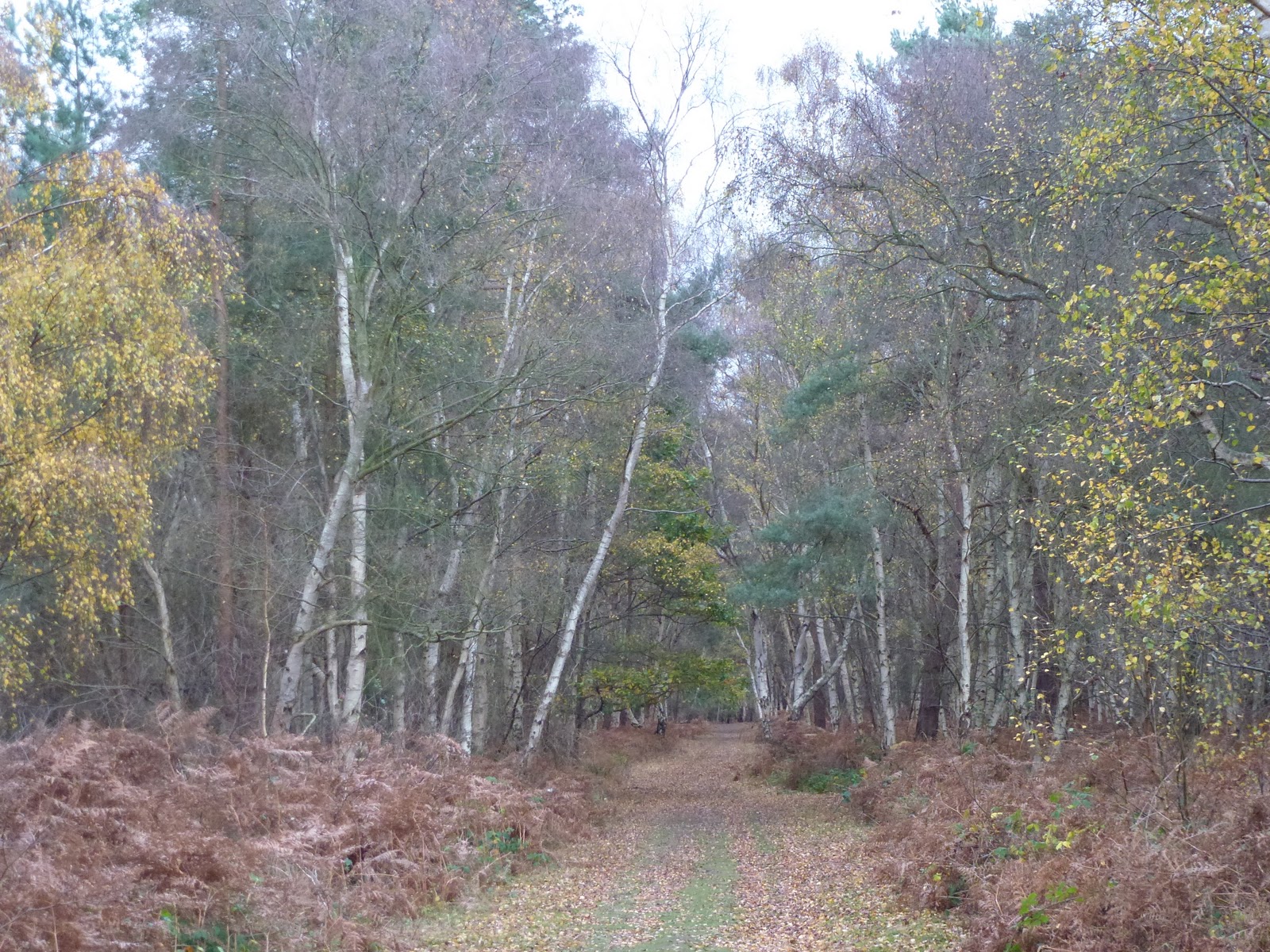
This pathway leads from Dunwich towards Eastbridge, into a network of open access walks across Dunwich and Westleton heaths: on this walk in late November, leaf-fall was late, the temperature mild, and reclining on a fallen pine tree as I took a break in the silver birch woods I listened to goldcrests and watched a  treecreeper.


What need to write of the low light, the late autumn colours? Bracken and silver birch create a special beauty. As I walked home, a single curlew flew over my head, low, surprisingly bulky of body with its downcurved beak, and lapwings called from a field where they had congregated with starlings and gulls, feeding before nightfall.


Endless forms most beautiful
Charles Darwin